
A shelf that’s too long, a glass door that needs to be adjusted, a countertop that needs to be resized, or a hole that needs to be added: you might find yourself with a pane of glass that’s already installed and wonder whether tempered glass can be cut to modify it.
The answer, in most cases, is very simple: No, tempered glass cannot be cut or processed like a regular sheet of glass.
It’s not a matter of finding the right tool or a more precise technique. The reason lies precisely in the properties that the glass acquires during tempering, which make it stronger and safer.
Let’s see why and, most importantly, what to do when a piece of tempered glass is no longer the right size.
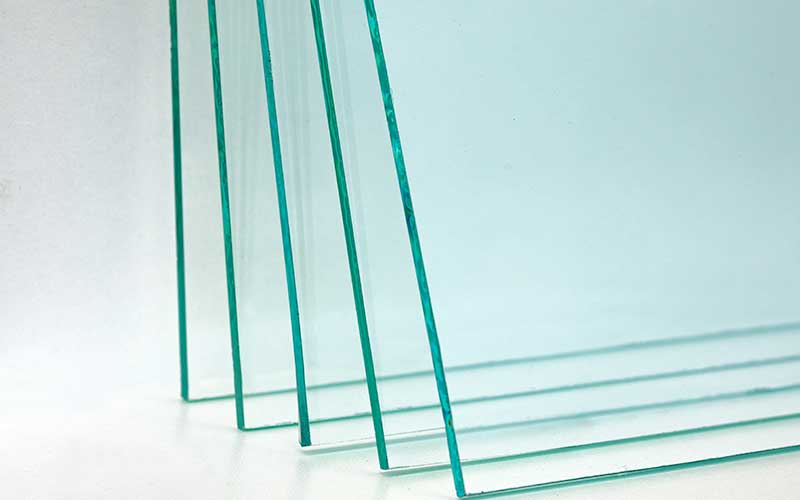
What is tempered glass, and what are its characteristics?
Tempered glass is glass that has undergone a specific heat treatment designed to increase its strength.
During the process, the slab is heated to a high temperature and then rapidly cooled. This cooling creates a specific stress distribution within the material: the surface remains under compression, while stresses are generated in the interior that balance each other out.
It is precisely this structure that gives tempered glass some of its most valued characteristics:
- greater mechanical strength than regular glass;
- good resistance to temperature fluctuations;
- greater safety in the event of a break;
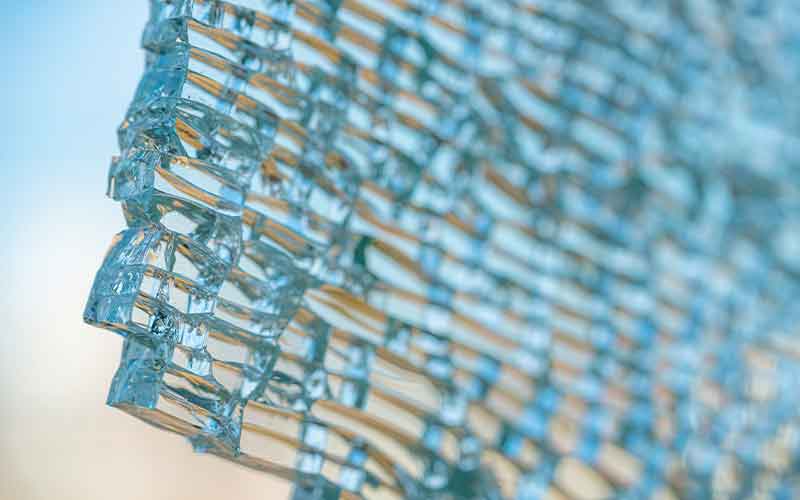
- the tendency to shatter into numerous small pieces rather than into the large, sharp shards typical of ordinary glass.
For these reasons, it is used in a wide variety of contexts, such as doors, walls, and partitions; shower enclosures; furniture; and other applications where durability and safety are particularly important.
Is it possible to cut tempered glass?
No: Once the hardening process is complete, the plate must not be cut.
In fact, the correct production sequence is the opposite: the glass is first cut to the required size, drilled, shaped, and edge-finished, and only then is it tempered.
Once the treatment is complete, those dimensions and those machining operations must therefore be considered final.
This is particularly important when ordering custom-made items. Before heat treatment, it is necessary to precisely determine the dimensions, shapes, any holes, openings, and the machining required for the final installation.
Why can't tempered glass be cut?
The reason is related to the internal stresses created during the hardening process.
In ordinary glass, it is possible to make a controlled incision on the surface and use it to achieve the desired cut. In tempered glass, however, incising or damaging the surface alters the balance of stresses within the sheet.
The result is not a clean cut along the desired line: the glass may suddenly shatter into numerous small pieces.
It is the very same characteristic that makes the material safer when it breaks that prevents it from being processed normally after hardening.
For this reason, using more powerful tools does not fundamentally change the problem. Even those looking for information on how to Cutting tempered glass with a diamond blade or using highly advanced cutting systems is based on a false assumption: what prevents machining is not simply the hardness of the material, but its internal stress.
How can you tell if a piece of glass is tempered?
It is not always easy to tell the difference between tempered glass and other types of glass just by looking at it.
One of the first things to check is whether there are marks or abbreviations stamped on the slab, which are often located near one of the corners. They may contain information about the manufacturer, the treatment applied, or the applicable standard.
There are also professional tools and techniques that make it possible to identify the effects of the stresses caused by heat treatment.
If the glass is already installed, does not have clearly legible markings, or its origin is unknown, it is best to not to attempt to cut or etch it to find out.
If you have any doubts, a glass shop can assess the situation and determine the most appropriate solution before proceeding with any work.
I have a piece of tempered glass that's too big—what can I do?
This is actually one of the most common requests: you already have a tempered glass panel, but during installation you realize that it needs to be shortened, shaped, or modified.
In these cases, you should not try to adjust it with a standard cut.
The best course of action is to check the necessary measurements and consider installing a new pane. The new pane can be:
- cut to its final size;
- cut to size as needed;
- drilled or machined where specified;
- trimmed along the edges;
- Finally, it undergoes the hardening process.
In other words, with tempered glass, it is essential to to design first and temper later.
Do you need to repair or replace a tempered glass pane?
If you have a sheet and aren’t sure whether it can be cut, modified, or replaced, it’s best to check its specifications first.
Dal Bo’ Artisan Glassworks can help you assess your existing glass and find the solution best suited to the new dimensions or the work required.
Once the glass has been tempered and can no longer be modified, we can consider creating a new custom-made sheet, ensuring that cuts, holes, and other finishes are correctly specified before tempering.
Contact us and let us know what kind of modification you need: starting with the correct measurements is the best way to ensure you get glass that’s suitable for your project, avoiding any trial-and-error attempts that could compromise it.